
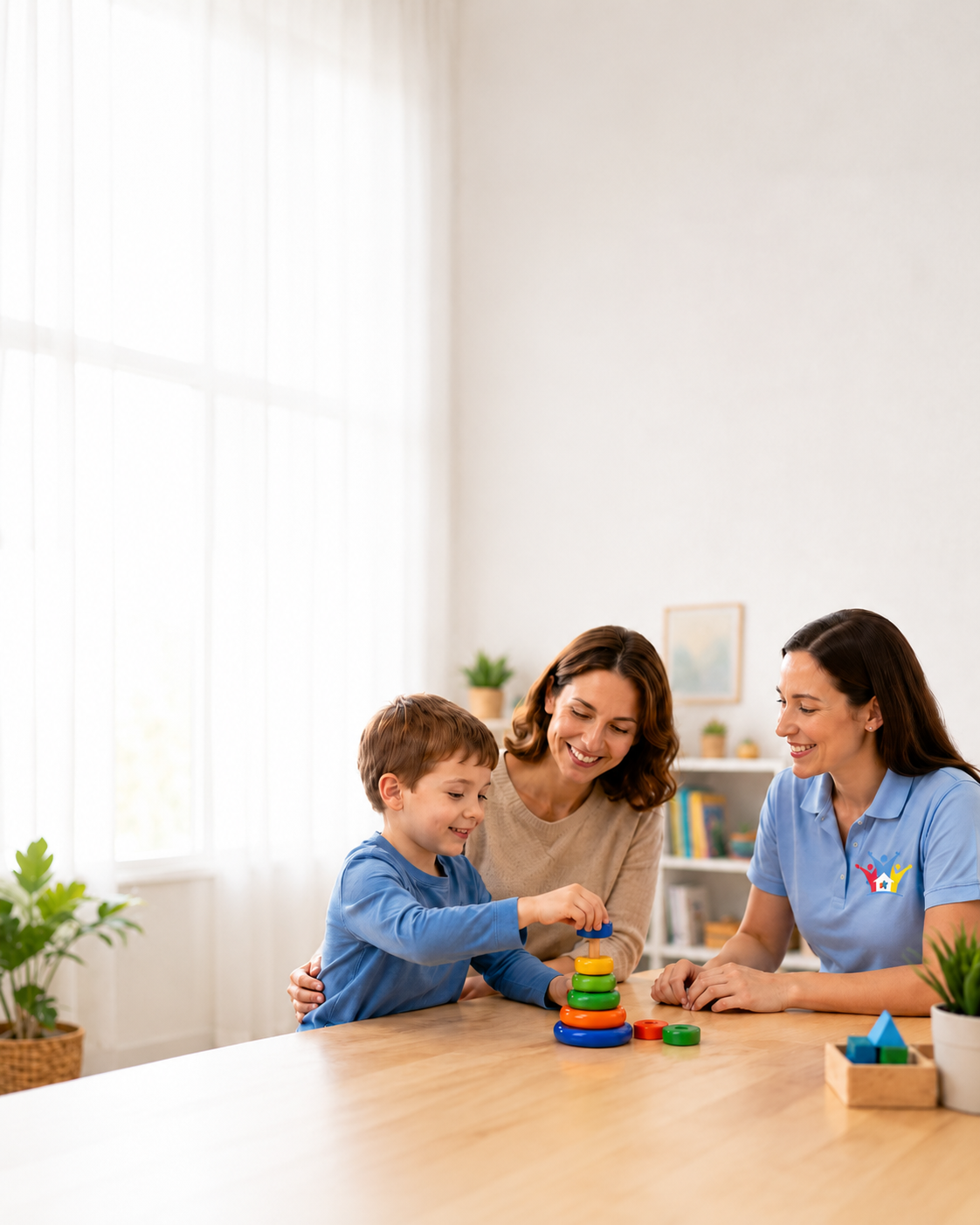
ABA therapy services

Understand the support your child may need

ABA therapy can feel overwhelming at first. We help families understand behavior, communication, routines, and progress one step at a time.

Start with what you see at home

Common reasons parents reach out

Many families come to us before they know exactly which service they need. These everyday concerns can help point the conversation in the right direction.

1

Communication feels hard

Your child may use behavior, gestures, or frustration to express needs. ABA can teach clearer ways to communicate.

Related support
2

Behavior is confusing

Tantrums, refusal, or transitions often have a reason. Assessment helps explain what the behavior is communicating.

Related support
3

You need a clear plan

Families deserve measurable goals, practical priorities, and a therapy plan that fits real life.

Related support
4

Home routines feel stressful

Caregiver guidance gives parents strategies for mornings, meals, bedtime, outings, and other daily moments.

Related support
5

School is the next step

Support can focus on classroom routines, attention, directions, transitions, and readiness for group learning.

Related support
6

Social connection needs support

Children can practice play, turn-taking, conversation, and peer interaction in a structured, caring way.

Related support

Services explained simply

What each type of support can mean for your family

Each service is designed around your child’s goals, your family’s priorities, and the environments where progress needs to happen.

My child has difficulty communicating needs or building daily skills.

ABA Therapy

One-on-one ABA therapy focused on communication, behavior, learning readiness, and independence.

What this means
ABA therapy uses individualized teaching to help children build communication, independence, learning readiness, and everyday routines.
When it may help
This may help when your child is struggling with transitions, instructions, social connection, self-care, or expressing wants and needs.
What your child may practice
Your child may practice requesting help, following routines, tolerating change, play skills, safety skills, and daily living tasks.
How parents are involved
Parents stay involved through updates, goal review, and practical strategies that can be used during real home routines.

Signs of progress: Progress may look like fewer frustrating moments, more communication, smoother routines, and skills showing up outside therapy sessions.

Common goals

  • Skill acquisition
  • Communication goals
  • Behavior reduction
  • Daily routine support

I want to understand why certain behaviors are happening.

Behavior Assessment

Assessment and observation to understand needs, strengths, behavior patterns, and family priorities.

What this means
A behavior assessment helps the care team understand your child's strengths, needs, triggers, communication patterns, and family priorities.
When it may help
This may help when behaviors feel confusing, routines are hard to manage, or you need a clearer starting point before services begin.
What your child may practice
The focus is observation and understanding, so recommendations can match what your child is communicating through behavior.
How parents are involved
Parents share what happens at home, what has worked before, and what daily moments feel most stressful or important.

Signs of progress: Progress starts with clarity: a better explanation of behavior, measurable goals, and a plan that feels realistic for your family.

Common goals

  • Functional assessment
  • Clear priorities
  • Baseline data
  • Care recommendations

We need a plan that fits our child, not a generic program.

Individualized Treatment Planning

Personalized care plans built around your child's goals, environment, and pace of learning.

What this means
Treatment planning turns assessment findings into goals, strategies, and session priorities that fit your child's needs and environment.
When it may help
This may help when your family needs clear goals, a consistent approach, and a way to understand whether therapy is working.
What your child may practice
Your child works on goals that matter in daily life, such as communication, independence, participation, and readiness for new routines.
How parents are involved
Parents help shape priorities and review progress so the plan stays connected to home, school, and family life.

Signs of progress: Progress may look like goals becoming more independent, skills being used in more places, and updated plans as your child grows.

Common goals

  • Measurable goals
  • Family priorities
  • Progress review
  • Care coordination

I need practical strategies I can use at home.

Parent and Caregiver Guidance

Practical support so caregivers can reinforce skills and routines outside therapy sessions.

What this means
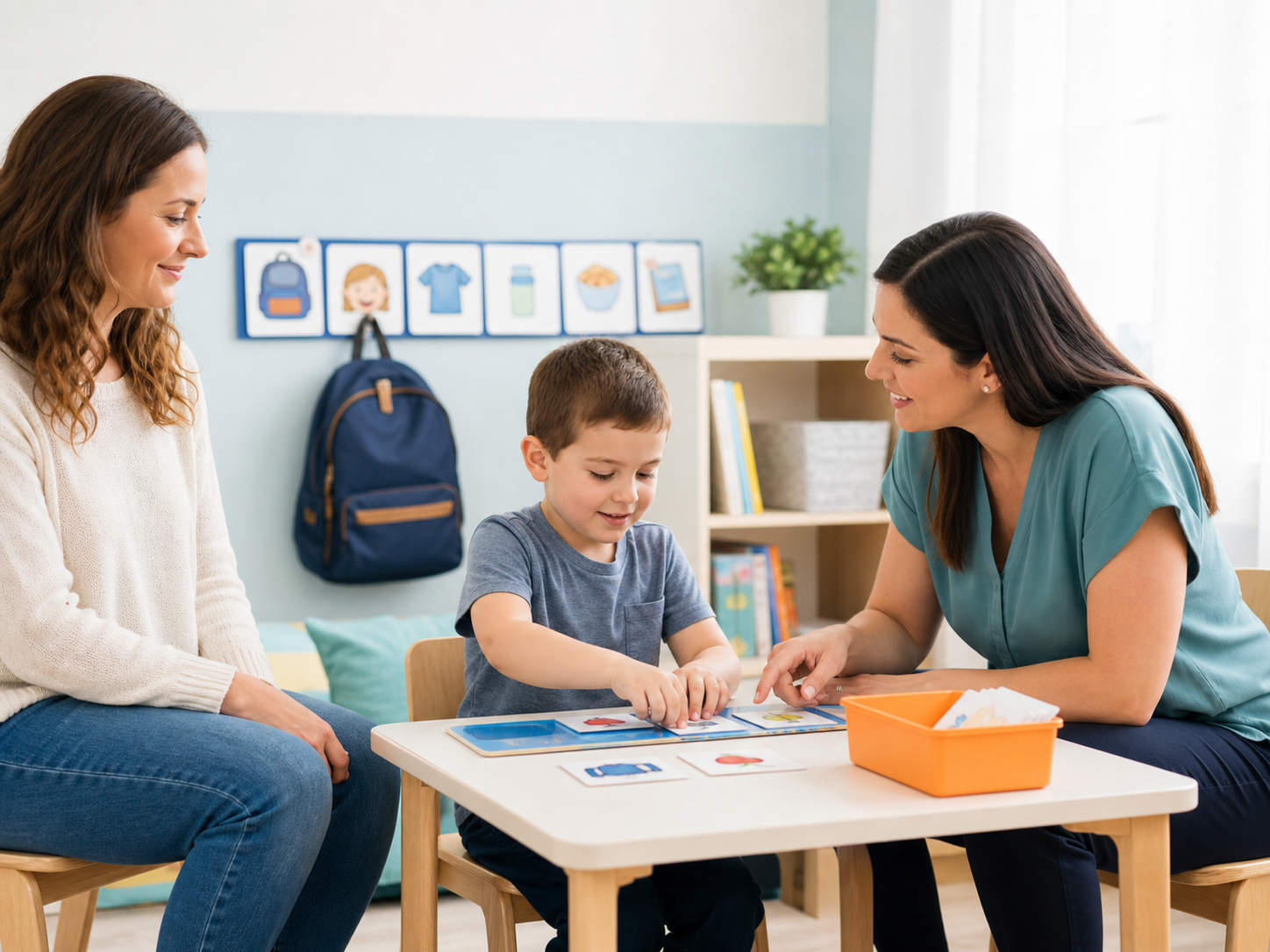
Parent guidance helps caregivers understand the therapy approach and use simple, consistent strategies between sessions.
When it may help
This may help when mornings, meals, bedtime, outings, or transitions feel stressful and you want tools that fit your routine.
What your child may practice
Your child benefits from consistency as caregivers reinforce communication, cooperation, and independence during everyday moments.
How parents are involved
Parents learn what to do before, during, and after challenging moments, with coaching that respects family realities.

Signs of progress: Progress may look like more confidence, fewer power struggles, and routines that feel more predictable for everyone.

Common goals
  • Coaching
  • Routine planning
  • Behavior strategies
  • Home carryover

School routines, transitions, or group settings feel hard.

School Readiness Support

Support for classroom routines, transitions, attention, and skills that help children participate at school.

What this means
School readiness support focuses on skills that help children participate in classroom routines and learning environments.
When it may help
This may help when your child struggles with sitting, waiting, following directions, transitions, group activities, or classroom expectations.
What your child may practice
Your child may practice responding to instructions, joining group routines, moving between activities, and using communication at school.
How parents are involved
Parents and caregivers help connect therapy goals with teacher feedback, school routines, and home practice.

Signs of progress: Progress may look like smoother transitions, more participation, longer attention, and better readiness for classroom expectations.

Common goals

  • Transitions
  • Group readiness
  • Following directions
  • Classroom routines

My child wants connection but needs help with play or social interaction.

Social Skills Development

Structured practice for play, peer interaction, turn-taking, conversation, and shared attention.

What this means
Social skills support helps children practice play, shared attention, turn-taking, conversation, and peer interaction in structured ways.
When it may help
This may help when your child has difficulty joining play, sharing space, reading social cues, or staying engaged with peers.
What your child may practice
Your child may practice greetings, requesting a turn, flexible play, conversation, group games, and responding to others.
How parents are involved
Parents learn how to create natural practice opportunities and support social growth without forcing interactions.

Signs of progress: Progress may look like more shared play, more attempts to communicate, longer peer engagement, and improved confidence.

Common goals

  • Play skills
  • Peer interaction
  • Turn-taking
  • Conversation practice

A calmer next step

What happens after you reach out

Parents do not need to arrive with answers. The first step is a conversation about your child, your routines, and what support would feel useful.

1

Tell us what you are noticing

You do not need the right words. Share what feels hard, what you have tried, and what you hope changes.

2

We help clarify the need

The care team reviews your concerns, service area, insurance, and whether ABA support may be a fit.

3

Your child is understood first

Assessment and observation help identify strengths, needs, behavior patterns, and family priorities.

4

A plan becomes daily practice

Therapy goals are taught through consistent sessions, parent guidance, and routines your child knows.

Parent questions

Helpful answers before the first call

These answers are meant to make the process easier to understand, not to pressure you into a decision.

What is ABA therapy?

ABA therapy is an individualized approach that teaches meaningful skills and reduces barriers to learning by understanding how behavior works in daily life.

How do I know which service my child needs?

You do not have to decide alone. The first conversation helps clarify your concerns, and assessment helps determine the right support.

Will parents be involved?

Yes. Parent and caregiver involvement helps skills carry over into home routines, school routines, and everyday family moments.

How is progress measured?

Progress is tracked through individualized goals, observation, data, parent feedback, and how skills show up across real settings.

Can services support school readiness?

Yes. Goals can include transitions, following directions, attention, group routines, communication, and other readiness skills.

Not sure which service fits?

Tell us what you are noticing.

Share what feels hard right now. We will help you understand services, coverage, and the next step for your child.

  • No need to know the exact service before reaching out
  • Family priorities are part of the plan
  • Parent guidance can support home and school routines

Call: (877) 270-0707

Let's see how we can help your child

Share a few details and our care team will guide the next step.

By submitting, you agree to be contacted by Spectrum Therapy Care about your inquiry.

Call (877) 270-0707